

In today’s increasingly digital world, driven by cutting-edge software, AI, and agent-driven capabilities for customer interactions, seamless transactions, and intuitive user experiences, the breaking points increase as user activity rises. A few seconds of a spike in inbound traffic, or stress scenarios such as a unique product launch, marketing campaign, or seasonal surge, can quickly push systems beyond their normal capacity.
Digital ecosystems are built on modern, highly distributed architectures, mixed workloads, and unpredictable user behavior, resulting edge-case scenarios that are hard to forecast with static load testing. Often, those surges lead to overprovisioning servers. These changes make traditional load-testing methods passe, demanding a more adaptive approach. What today’s enterprise needs isn’t more testing, but deeper insight into how systems perform and hold up under real-world pressure—insight that AI-driven load modeling delivers as part of a predictive Quality Engineering approach.
Read the rest of this blog to dive into the basics of load testing. Also, explore how QualiZeal’s AI-powered enhancements alter the equation, enabling software, websites, applications, and APIs to dynamically adapt to traffic patterns, predict performance challenges, and seamlessly scale to meet shifting demands in real time.
What Load Testing Is and Why It Matters
Load testing is a quintessential part of Quality Engineering and a component of performance testing that helps evaluate how systems perform when they experience varying levels of inbound traffic driven by user activity under real-world conditions, pre-empting and addressing performance and reliability threats. At a technical level, load testing helps simulate user activity to observe how systems, applications, infrastructure, and integrations respond under pressure. These tests remain crucial in increasingly digital and AI-driven enterprise environments, where poor performance and outages due to missed bugs, defects, and security vulnerabilities affect stakeholder and customer trust.
Traditional load testing methods follow a familiar process:
- Replaying historical peak traffic patterns
- Running tests against predefined user journeys
- Evaluating performance before major releases
- Generating reports on response time, throughput, and error rates
While these insights and practices are useful for understanding system performance under static conditions, they do not account for user journeys and interactions in unique scenarios, volume spikes, real-time server responses, and code changes. They do not help detect anomalies that lead to massive failures outside controlled test environments. In summary, traditional load testing methods rule out ‘What ifs’ and ‘Just in case’ scenarios.
The Hidden Challenges of Traditional Load Testing
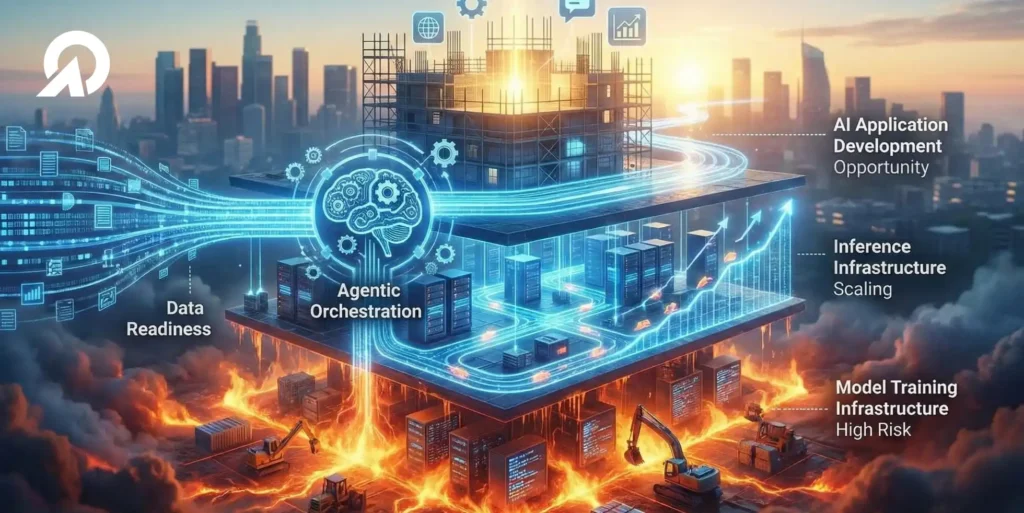
Below are some of the risks of holding on to traditional load testing in an era that has clearly moved to a hyperconnected ecosystem of servers, databases, third-party APIs, and microservices, which demand high-availability and load adaptation over frequent latency fluctuations and system errors:
- Static traffic assumptions: Traditional load tests usually assume uniform traffic and normal production usage patterns. In real environments, user behavior varies significantly, and traffic volume fluctuates exponentially due to external factors like market trends, planned discounted sales, customer stockpiling, promotional uplifts, product price elasticity, etc. At the user level, due to the proliferation of mobile devices and the ease of access to applications and systems, browsing has increased significantly, making it hard to predict behavior and degradation under different workloads and traffic patterns.
- Limited simulation of real system interactions: Predefined test scripts rarely capture the complex interactions that occur in production environments.
- Inability to simulate sudden demand spikes: Marketing campaigns, flash sales, and social media exposure can generate rapid increases in traffic. Static testing methods often struggle to accurately simulate these sudden spikes.
- Delayed insight into performance risks: Because load testing is typically performed at specific stages of the release cycle, many potential issues only surface after systems are already deployed.
From Load Testing to Load Modeling

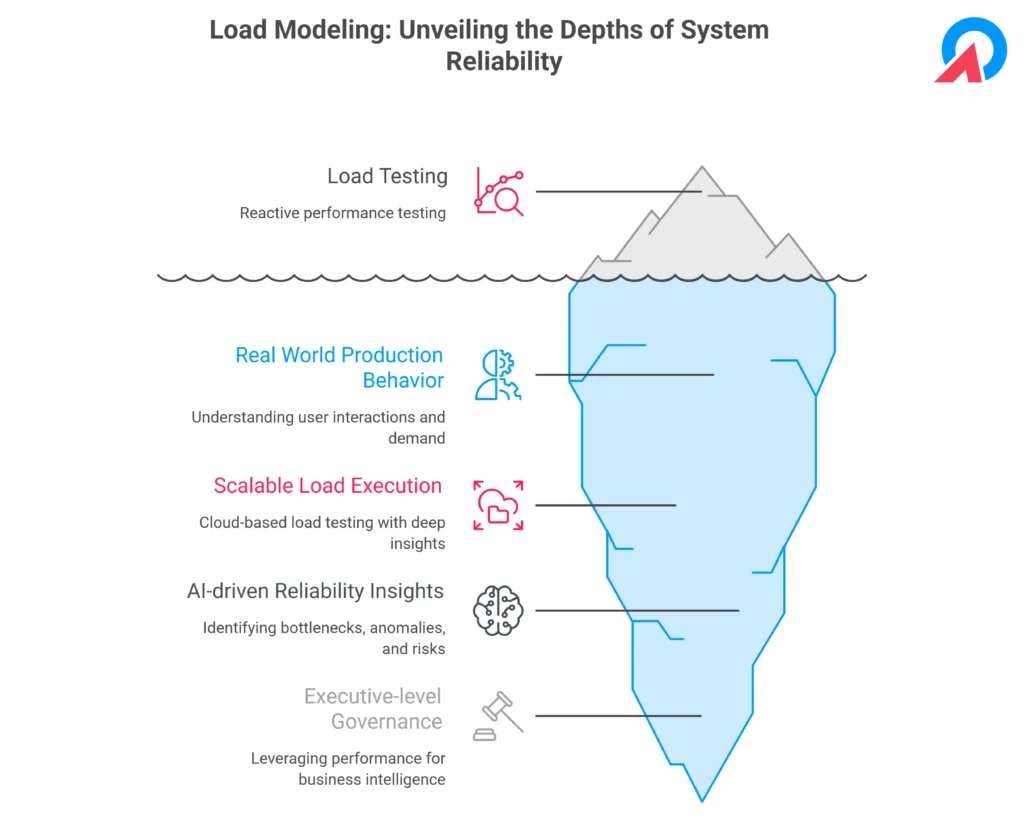
To address these challenges, many engineering teams are shifting toward load modeling. QualiZeal’s Reliability Insights Center (RIC), an AI-assisted reliability engineering platform, transforms reactive performance testing into proactive reliability engineering. It has been enabling enterprises to move towards intelligent load modeling, leveraging capabilities such as:
Real World Production Behavior: Intelligent load modeling helps segment user personas, design practical traffic mixes, model campaign spikes and concurrency patterns, and simulate burst behavior.
Intelligent load modeling focuses on understanding how users interact with systems and how those interactions shape system demand. Rather than depending on historical traffic or making blind assumptions about uniform traffic, it builds realistic traffic patterns and scenarios that reflect how workloads behave in real business dynamics.
Scalable Load Execution: By integrating with industry-standard tools like JMeter, it enables running load tests in cloud environments, scaling execution on the go, capturing deep telemetry insights, and monitoring cross-service dependencies. Ultimately, this transforms load execution into structured experimentation that goes well beyond simple stress testing.
AI-driven Reliability Insights: Oftentimes, testing teams that rely on traditional load testing do not see what failed, why it failed, or what may fail again. RIC’s AI-powered insights deliver an intelligence layer that enables bottleneck clustering, threshold deviation detection, anomaly identification, risk heatmapping, and prediction of failure indicators.
Executive-level Governance: Enterprise software performance and reliability reduced to QA reports serve no purpose beyond generic documentation. When the system and application’s performance under load is leveraged for business intelligence, it enables executive-level governance to understand what can be addressed before encountering massive downtime, user abandonment, and loss of brand trust. With SLA-aligned dashboards featuring release-readiness scoring, infrastructure optimization insights, and reliability maturity tracking, QE teams can take load modeling to the next level.
The Role of AI in Modern Load Modeling

AI integration in performance engineering isn’t a new trend. Organizations that have adopted AI-driven load modeling are typically better positioned to achieve benefits that go beyond what methods built entirely on manual assumptions can offer.”
- Reduced Production Incidents
- Faster Release Confidence
- Peak-Load Readiness
- Optimized Cloud Spend
- Improved Customer Experience
- Stronger SLA Adherence
- Visibility Across the Organization
From Performance Testing to Reliability Engineering
AI-driven load modeling represents a broader shift in how organizations approach system performance. By combining AI insights with structured workload modeling, organizations can design systems that are resilient by default. Infrastructure planning can align with expected traffic volatility, and release planning can incorporate predictive risk insights.
At QualiZeal, we help enterprises modernize performance engineering through advanced Quality Engineering practices and AI-enabled testing strategies. Connect with our experts to explore how your organization can move toward a predictive QE ecosystem built for today’s digital scale.