
Test automation is meant to achieve three major goals—speed, consistency, and reliability. In simplistic terms, it is meant to offload repetitive manual checks. This, in turn, helps development teams to move faster, deploying code with the confidence that nothing has broken.
However, for most practitioners this is far from reality. As applications grow in complexity and release cycles shrink, a new issue is plaguing development cycles. Every new feature added to an app creates a compounding backlog for test maintenance. And that’s a problem.
This is where self-healing test automation makes a difference. It is a fundamental shift from deterministic testing—where a script looks for a specific string of code—to intent-based testing, where AI understands what a user is trying to achieve.
Recognizing this need, QualiZeal offers the QMentisAI platform, which leverages Generative AI and LLMs to automate the entire testing lifecycle, thereby reducing maintenance overhead by up to 60%.

The “High Maintenance” Cost of Automation
In traditional automation, a test script is only as good as its most brittle locator. These tests have a rigid reliance on static identifiers such as CSS classes or XPaths. When a developer renames a class or changes the position of a call-to-action button, the test script usually fails because it can no longer find the target. This can lead to a pile up of false negatives that can eventually lead to a massive backlog in the release pipeline.
Despite the excitement surrounding GenAI, many organizations still struggle to move beyond experimental phases, putting a significant strain on quality engineering effort by increasing maintenance and manual intervention activities. As a result, it has necessitated a transition from deterministic testing to intent-based testing. This shift means that testing focuses on validating user outcomes rather than underlying code structures, allowing test scripts to adapt to the natural evolution of modern applications.
The Mechanics of Self-Healing
In self-healing test automation, the single point of failure in legacy locators is replaced with a concept known as dynamic fingerprinting. When a test is successfully executed for the first time, the AI engine captures a multi-dimensional profile of every element. This includes its structural context, visual attributes and text content, as well as its geometric coordinates. If the primary locator fails during a run, a machine learning engine calculates a similarity score for all other elements.
The execution cycle usually involves:
- Autonomous detection of a failure
- Rapid diagnosis of the page structure
- Immediate remediation that allows the test suite to finish its run
- A report on the fix for final approval
These advanced techniques allow platforms to see applications like a human would, catching visual changes and broken layouts that conventional tools typically tend to miss. Even if an element’s tag or ID has changed, the system can perform a dynamic patch in real-time by analyzing the probability that a new element is the intended target.

A Strategic Shift in Test Automation: Beyond Just Time Saving
The impact of self-healing reaches beyond simple time savings—it fundamentally alters the ROI of the quality engineering department. Industry benchmarks indicate that the average organization sees a 19% productivity boost from AI. And high-maturity leaders are achieving much more significant gains by eliminating or reducing the false positives that tend to choke release pipelines. This recovered time allows for a larger strategic shift in the QA role, from a fixer of broken scripts to a more strategic role focused on risk coverage and business impact.
Additionally, the move toward autonomous, self-adapting components can significantly reduce time-to-market. Because maintenance is largely offloaded to the AI, teams are better placed to scale their test coverage to meet the demands of rapid release cycles without a corresponding increase in headcount. This can turn what was once a bottleneck, into a competitive advantage for the enterprise.

The Human-in-the-Loop
For the practitioner, implementing self-healing requires a focus on the technical aspects (selector healing, timing adjustments, runtime error handling, etc.) and strict governance standards. One of the biggest risks in autonomous testing is the “Shadow Bug”, a scenario where the AI heals a test that should have failed because a feature was legitimately broken or removed.
To mitigate this, high-performing teams utilize a “Human-in-the-loop” workflow where the AI provides a confidence score for its suggested fix. If the score falls below a certain threshold, the system triggers a manual audit rather than automatically accepting the change. This ensures that the human tester remains the final arbiter of quality. This approach prevents the model from deviating and ensures the testing logic remains aligned with the business requirements. If CTOs are not taking note already, they should.
Moving Towards Agentic Testing
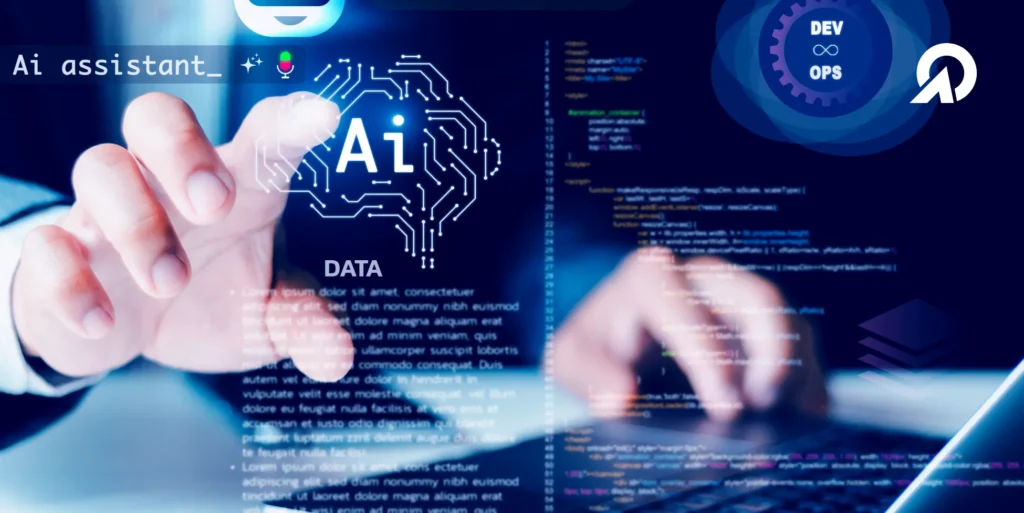
As we move through 2026, the market is shifting toward Agentic Quality Engineering. This involves the use of autonomous AI agents that do not just react to failures but proactively analyze code changes to predict and prevent failures. Agentic AI has been identified as a top strategic trend, with over 70% of enterprises expected to integrate AI-augmented tools into their development workflows by 2028.
This trend is also driving the democratization of quality, as low-code and no-code interfaces allow non-technical and business stakeholders to participate in the testing process. Here, the AI handles the underlying technical aspects.
As the global testing automation market continues to expand and evolve, organizations are increasingly seeking specialized services to integrate these complex AI tools into their existing workflows. This approach ensures that they can leverage the full power of autonomous quality without the added responsibility of maintaining the AI infrastructure itself.

Future Proofing Quality Engineering
In an AI driven era, self-healing is no longer a luxury but an intrinsic requirement for efficient and accurate software delivery. By effectively managing their maintenance backlog, organizations can achieve a workflow and environment, where testing is as dynamic and resilient as the applications it is meant to protect.
QualiZeal understands that true quality is found at the intersection of human ingenuity and autonomous intelligence. By shifting the paradigm from reactive script repair to proactive Agentic Quality Engineering, QualiZeal helps clients transform their testing from a cost center into a strategic engine of growth and innovation.
QualiZeal aims to ensure that every release is a guarantee of excellence, enabling enterprises to navigate the complexities of digital transformation with confidence and a quality-first approach.
Are you looking for a reliable test automation service partner? Connect with us today!