
If you can’t explain an AI decision, control what it can access, or roll it back when necessary, you don’t have enterprise AI. You have a pilot.
That’s the reality NexaAI, QualiZeal’s enterprise AI development service, is built for. It is designed to help CIOs and AI leaders move from promising enterprise AI pilots to production systems that are governable, secure, and reliable at scale. In other words, build trustworthy AI systems that can run inside enterprise workflows.
In fact, McKinsey’s 2025 global survey reports that nearly two-thirds of organizations have not yet begun scaling AI across the enterprise, even though usage is widespread. In the rest of this blog, we will unveil exactly why enterprises need an operating model for trustworthy AI.

The Uncomfortable Truth About Enterprise AI
Pilots work because they are protected environments. They run on curated data, operate with limited users, avoid edge cases, and bypass messy access controls and legacy workflows. They don’t face audit questions, and they don’t have to survive day-two realities like model updates, hallucinations, changing retrieval sources, evolving policies, and rising inference costs.
Production, however, is different.
In production, enterprise AI behaves less like a normal application and more like a living system that is probabilistic in nature, data-dependent, and prone to changing its behavior over time. That makes enterprise AI development a fundamentally different discipline than traditional application development.
As a result, organizations struggle to scale AI across the enterprise, not because the model isn’t good enough, but because the enterprise doesn’t have a repeatable operating framework that connects governance and risk controls, secure access and data readiness, operational reliability, and adoption and change management.
Regulation, Risk, and Repercussions
For a long time, enterprises could treat AI governance as a future problem. Build the pilot and prove value first. Then figure out how to add governance and control to it.
Unfortunately, that sequence no longer holds true. Increasingly, regulations like the EU AI Act are making it clear that enterprises need to show that they can control and audit it across its lifecycle. The practical implication of these regulations means that trustworthy AI will increasingly be the price of admission for scaling AI across regulated industries and environments.
Meanwhile, the cost of getting it wrong is already increasing. EY’s 2025 survey found that 99% of organizations reported financial losses linked to AI-related risks, with nearly two-thirds reporting losses above $1 million, with the average estimated loss pegged at $4.4 million. No wonder Gartner predicts that by 2027 AI governance will become a requirement of sovereign AI laws and regulations worldwide.
For CIOs and AI leaders, this means that governance and controls have to be baked in right from the beginning and not bolted on later, and the strategic priority now is to make AI scalable without making it uncontrollable.

The Missing Operating Framework for Trustworthy AI
The lack of an operating framework is where many enterprise AI programs hit a roadblock. A practical way forward is to treat enterprise AI as core infrastructure and build a repeatable operating framework with four connected pillars—govern, build, run, and adopt. Think of it as the minimum requirement for implementing trustworthy AI at enterprise scale. If you can’t run all four, you won’t have enterprise AI that’s governed and controlled properly.
The framework starts with governance, because trust cannot be retrofitted. In an enterprise context, governance is not an ethics statement or a policy PDF. It is controls, evidence, and enforcement. It is the ability to answer uncomfortable questions like what data did the system access, was it authorized to access, who authorized it, what sources helped shape the output, what guardrails were active, and what has changed since the last release?
This is also where TRiS—Trust, Risk, and Safety—stops being a buzzword and becomes a license to operate. A credible TRiS posture means you continuously evaluate the system for real-world failure modes such as hallucinations, unsafe output, and bias. You test behavior under adversarial scenarios. You enforce guardrails that align with policy and regulations. These can’t be achieved when governance is bolted on.
Then comes the reality of the build phase. Enterprise AI creates value only when it is embedded in real workflows. But, enterprise knowledge is messy—spread across systems, poorly tagged, inconsistently permissioned, and constantly changing. In production, this becomes a liability if it is stale, unstructured, or overexposed.
That’s why integration depth and data readiness are strategic prerequisites. This requires explicit identity and access controls with enforced data boundaries and a knowledge pipeline with built-in permissions. If retrieval can’t prove what it used and why, the model will still answer confidently. But, enterprises won’t be able to trust it.
Once you’ve built it, you need to run it effectively and efficiently. Day two operations won’t be a phase—it’ll be the default state. So, the system needs to behave predictably under change. As models update, prompts evolve, knowledge bases shift, and users discover edge cases, you should be able to monitor the system, test it, and roll back safely if needed. If you are unable to do any of that, you are just one incident away from being hauled over the coals by the regulators or being pummeled by your customers.
This is why LLMOps and evaluation discipline matters. They bring operational rigor into the AI layer with continuous evaluation of output quality, monitoring for accuracy and anomalies, cost and latency observability, and rollback paths when behavior deviates.
Finally, none of these matter if adoption is unmanaged. Even well-built enterprise AI systems will fail if users don’t trust them, don’t understand safe boundaries, or find it easier to use external consumer tools that are outside the internal governance framework. Managing user adoption requires role-based enablement, clear policies embedded into how work is done, and an ownership model that can evolve standards without affecting delivery.
It also requires recognizing a difficult truth that safe automation is not about letting AI do more. It is about letting AI do the right things within defined boundaries, with explainability and the ability to intervene and control. Without that, automation becomes uncontrolled execution—fast, opaque, and hard to unwind.

NexaAI: From Framework to Execution
NexaAI is designed to help enterprises implement trustworthy AI and operationalize the four moves—govern, build, run, and adopt—without treating governance, security, and reliability as bolt-ons.
It starts by aligning AI initiatives with enterprise realities—governance expectations, security constraints, and measurable value. It then embeds TRiS disciplines into the development lifecycle, so governance is baked in and not a separate program running as an add on.
On the build side, NexaAI emphasizes integration depth and knowledge readiness because that is where enterprise AI either becomes reliable or downright risky. The goal is not just to connect a model to enterprise data, but to engineer the knowledge layer with permission boundaries and retrieval quality so the system can be trusted inside workflows.
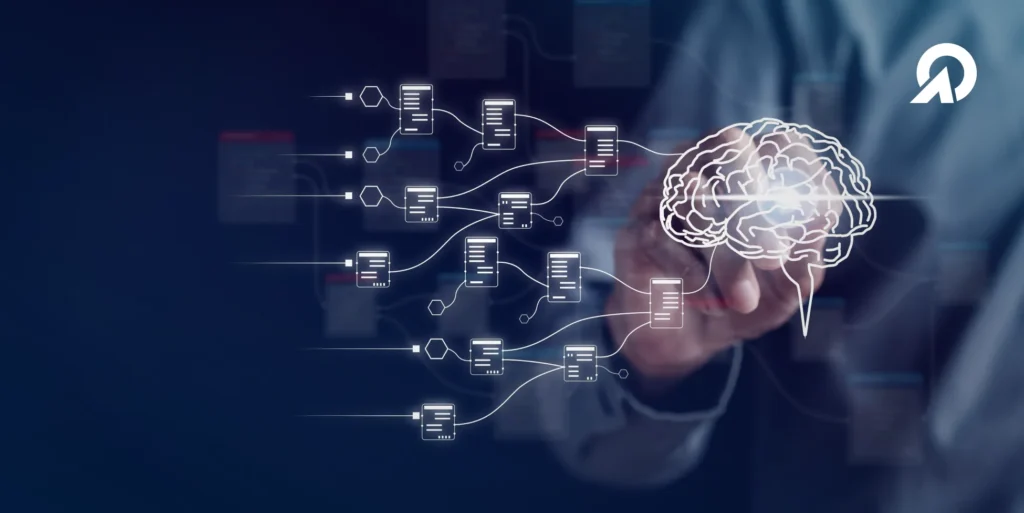
On the run side, NexaAI applies LLMOps and reliability discipline, so AI behaves like core IT—observable, measurable, manageable, and controllable. That includes monitoring for inconsistencies, hallucinations, bias, and quality degradation, tracking performance and cost signals, and ensuring teams have rollback options when behavior changes unexpectedly.
Finally, NexaAI treats adoption and change management as part of enterprise readiness. It supports role-based enablement and governance in the workflow so organizations can scale AI responsibly. And because CIOs and AI leaders are ultimately accountable for outcomes, it reinforces the discipline of measuring value so scaling decisions can be defended with real results.
Enterprise AI won’t be won by the teams that build the flashiest pilots or demos. It will be won by the teams that can operate AI under scrutiny—securely, reliably, and at scale. That requires a repeatable framework that reliably connects governance, integration, operations, and adoption. NexaAI exists to help enterprises build that bridge, so innovation doesn’t stall and scaling enterprise AI doesn’t become a risk.
Ready to transform your enterprise AI development? Let’s talk.